2026-08-07
Wall Mural vs Vinyl Decals for Your Space
Wall mural vs vinyl decals: compare finish, customization, durability, installation, and cost to choose the right graphic solution for your space today.
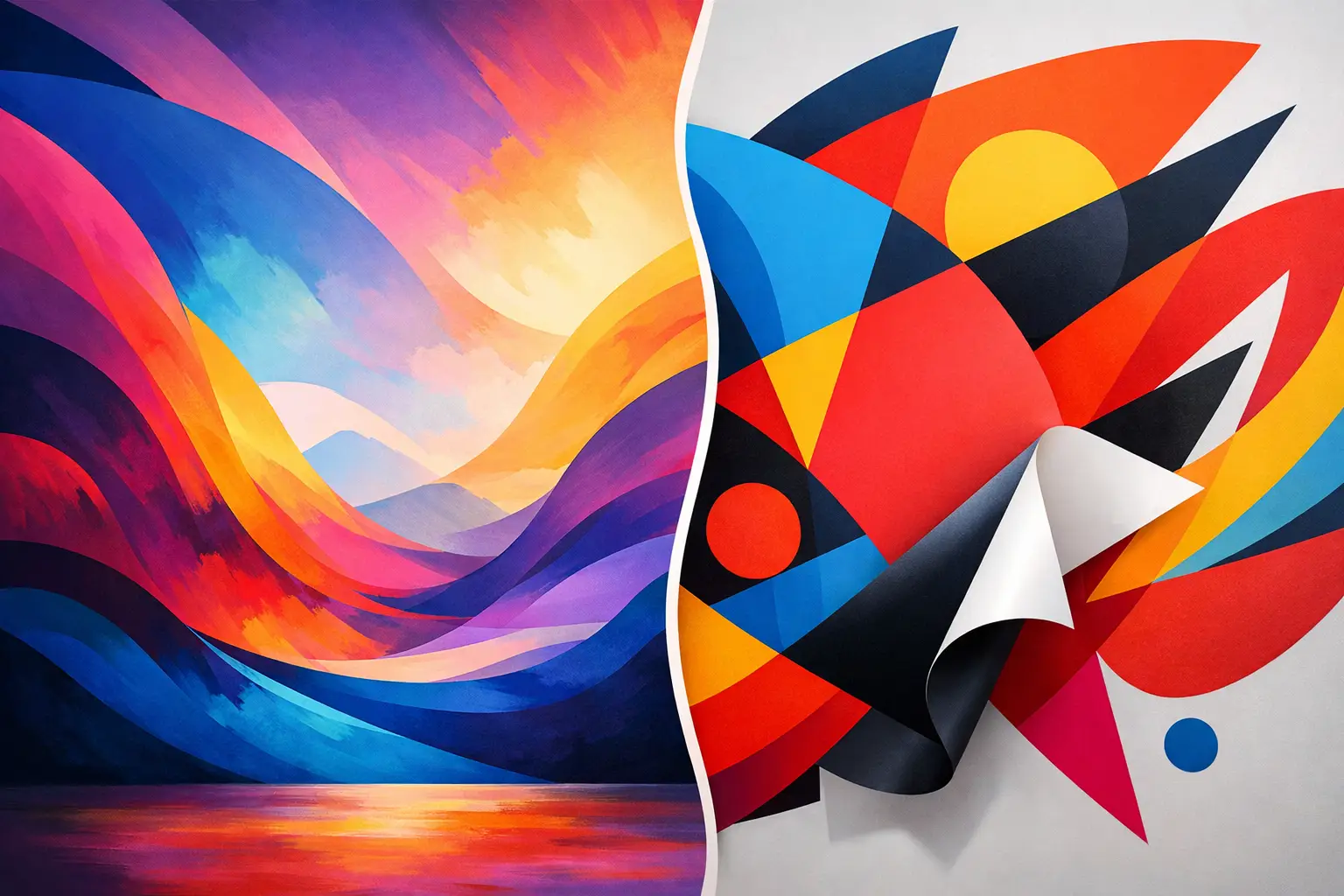
A blank wall in a boardroom, retail space, nursery, or restaurant rarely stays blank by accident. It is usually waiting for a decision: a subtle branded detail, a full visual moment, or something that brings character without taking over the room. When comparing wall mural vs vinyl decals, the right choice comes down to more than the artwork. It affects how the finished surface feels, how long it lasts, how much visual impact it creates, and how involved the installation needs to be.
Both options can transform an interior. But they do it in very different ways.
Wall Mural vs Vinyl Decals: The Core Difference
A vinyl decal is a printed or cut vinyl graphic applied to a wall. It may be a logo, lettering, individual shapes, a small illustration, or a larger image installed in separate sections. Decals are popular because they are familiar, versatile, and often removable.
A wall mural can refer to several formats, including wallpaper-style panels, applied vinyl graphics, and direct-to-wall printing. For a premium, integrated result, direct wall printing places the artwork directly onto the prepared surface rather than adding a film over it. The result looks less like an applied sign and more like the wall was designed that way from the start.
That distinction matters when the goal is a high-impact accent wall, an immersive brand experience, or artwork that needs to cover a substantial area without obvious edges, seams, or material shine.
Choose Vinyl Decals When Flexibility Matters Most
Vinyl decals are a practical fit for graphics that are smaller in scale or likely to change. A retail business running a seasonal promotion, an office adding temporary campaign messaging, or a tenant working within landlord restrictions may benefit from the flexibility of vinyl.
They also work well for simple applications. Window-adjacent logos, door labels, short wall quotes, directional arrows, and individual icons do not always require a full mural. A carefully installed decal can provide a clean, professional result while keeping the scope focused.
The trade-off is visual integration. Even high-quality vinyl is still a separate material sitting on top of the wall. Depending on the finish, lighting, wall texture, and viewing angle, it can show a sheen or reveal its edges. On heavily textured walls, adhesion and appearance can become less predictable. Large decal installations may also introduce panel seams, alignment challenges, or air bubbles if the work is not handled with precision.
Vinyl can be the right answer, especially when changeability is part of the brief. It is simply not always the strongest choice for a permanent, room-defining statement.
Choose a Wall Mural for Immersive, Custom Impact
A mural earns its place when the artwork needs to carry the room. Think of a restaurant wall that sets the atmosphere before a guest reaches the table, a reception area that communicates a brand's confidence, or a childs room built around a one-of-a-kind illustration.
Direct-to-surface wall printing is particularly effective when you want the graphic to feel architectural rather than applied. The ink is printed directly onto the wall in high resolution, allowing for sharp details, smooth gradients, custom dimensions, and artwork tailored to the exact surface. With commercial-grade equipment capable of output up to 1440 DPI, even intricate illustrations, photographic textures, and fine brand elements can retain their intended clarity.
The finish is typically more matte and natural than a vinyl application. That makes it especially suited to offices, hospitality spaces, and residential interiors where glare would distract from the design. There is no large adhesive sheet to peel, wrinkle, or lift at the edges.
A direct-printed mural is also designed around the walls real dimensions. Instead of forcing a stock pattern or standard panel size to fit, the artwork can account for doors, outlets, soffits, furniture placement, and architectural features. That level of control turns an ordinary surface into a deliberate part of the environment.
Appearance: Applied Graphic or Integrated Surface?
For many property owners and designers, this is the deciding factor.
Vinyl decals can look excellent when they are simple, clean, and installed on a smooth wall. A crisp logo in a lobby or a set of branded shapes behind a reception desk can be highly effective. But the material itself remains part of the finished look.
A wall mural offers more visual continuity. It can extend from edge to edge, wrap around features, or create depth that changes how the room is perceived. A forest scene can make a compact wellness room feel more expansive. An abstract pattern can give a boardroom a stronger identity without adding clutter. A custom graphic can reinforce brand colors and messaging without relying on framed signage.
If the artwork is meant to be noticed from across the room, photographed by customers, or remembered after a visit, a mural usually provides the greater return in visual impact.
Installation and Surface Preparation Matter
Neither option should be treated as a simple print-and-stick project. Wall condition has a direct effect on the final result.
For vinyl, the wall needs to be clean, dry, and properly cured if it has been recently painted. Dust, uneven texture, poor paint adhesion, and moisture can all compromise the decal. Removal can also pull weak paint from the surface, particularly in older buildings or spaces with lower-quality paint finishes.
For direct wall printing, surface preparation is equally important. The wall should be stable, clean, dry, and reasonably smooth. Small imperfections may be less visible in a painterly or textured design, while sharp logos, fine typography, and high-contrast imagery demand a more refined surface. A professional site review helps identify potential issues before the artwork goes to print.
This is where a disciplined process saves time. Reviewing the wall, confirming measurements, optimizing the artwork file, and approving placement before installation reduces surprises. The goal is not only a beautiful image. It is a finished surface that looks intentional at close range as well as from across the room.
Durability and Change: Think Beyond Opening Day
A direct-printed mural is best suited to spaces where the design has a long-term role. It is durable for normal interior use and does not have a vinyl edge that can catch or lift. Low-VOC, indoor-safe inks also make it a strong option for occupied residential and commercial spaces.
That permanence is a benefit when a mural is tied to a lasting brand identity or a homeowners established design direction. It is less ideal for messaging that changes every quarter or for a short-term lease where restoration requirements are strict.
Vinyl decals have an advantage when removal or replacement is expected. They can be updated more easily, though removable should not be mistaken for risk-free. The outcome depends on the decal material, the length of time it has been installed, the paint beneath it, and the walls condition.
A useful rule is to match the graphics lifespan to the installation method. Short-term campaigns favor vinyl. Long-term environmental design favors murals.
Cost Is About Scope, Not Just Square Footage
It is tempting to assume decals are always less expensive and murals are always more expensive. In reality, the comparison depends on size, wall condition, artwork complexity, access, and installation requirements.
A small set of cut vinyl letters will generally cost less than a custom wall mural. But a large, multi-panel decal with detailed artwork, extensive coverage, and careful alignment can become a significant installation. At that point, direct wall printing may offer a more refined finish with fewer visible material transitions.
For businesses, cost should also be measured against the role the wall plays. A generic sign may fill empty space. A custom mural can support customer perception, strengthen wayfinding, create a photo-worthy moment, and make a workplace feel more considered. For homeowners, it can replace multiple decorative elements with one surface that feels personal and complete.
The Better Choice Depends on the Job
Choose vinyl decals when the design is small, temporary, simple, or likely to change. Choose a wall mural when the space calls for immersive artwork, precise customization, and a premium finish that becomes part of the interior.
For projects in Kitchener-Waterloo, Cambridge, or Guelph, Inkling Labs evaluates the artwork, wall condition, and intended lifespan before recommending a direction. That consultation matters because the best-looking result is rarely the one chosen from a material sample alone.
The strongest interior graphics begin with a clear purpose. Give the wall a job to do - welcome people, tell a story, guide a customer, reinforce a brand, or make home feel unmistakably yours - and the right format becomes much easier to see.